The Department of Electrical and Electronics Engineering, Paavai College of Engineering, organized an insightful Guest Lecture on the topic “Quantum Computing for Electrical Engineers” on 17th September 2026.
The programme commenced with a warm welcome address delivered by Ms. Srinithi S, followed by the introduction of the Chief Guest by Ms. Harishna A, a Third-year EEE
Dr. V. Hariharan, Principal, Paavai College of Engineering, delivered the presidential address, in which he elaborated that We are living in an era in which the boundaries between electrical engineering, computer science, physics and advanced materials are becoming increasingly interconnected. Quantum computing is one of the most exciting developments at this intersection.
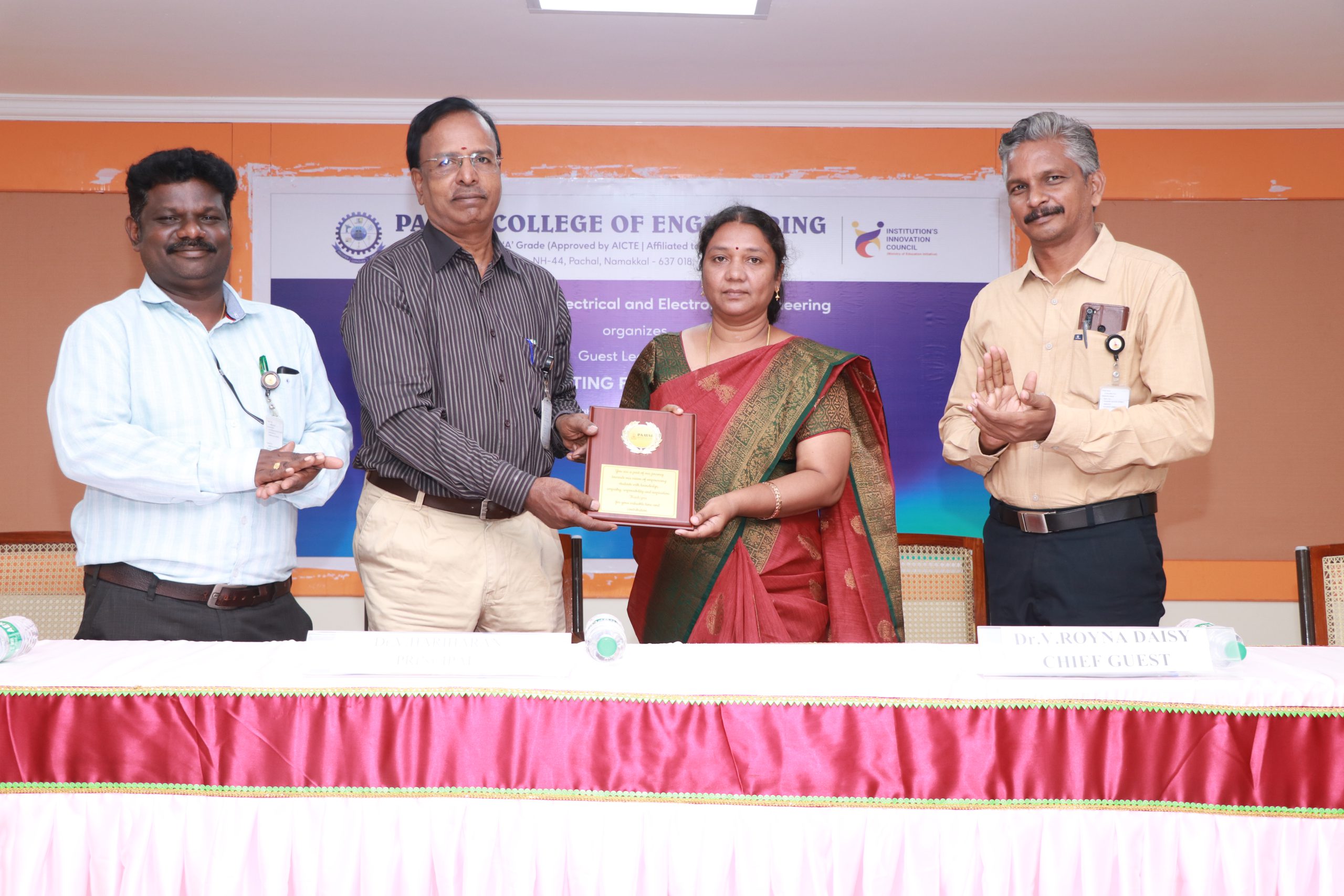
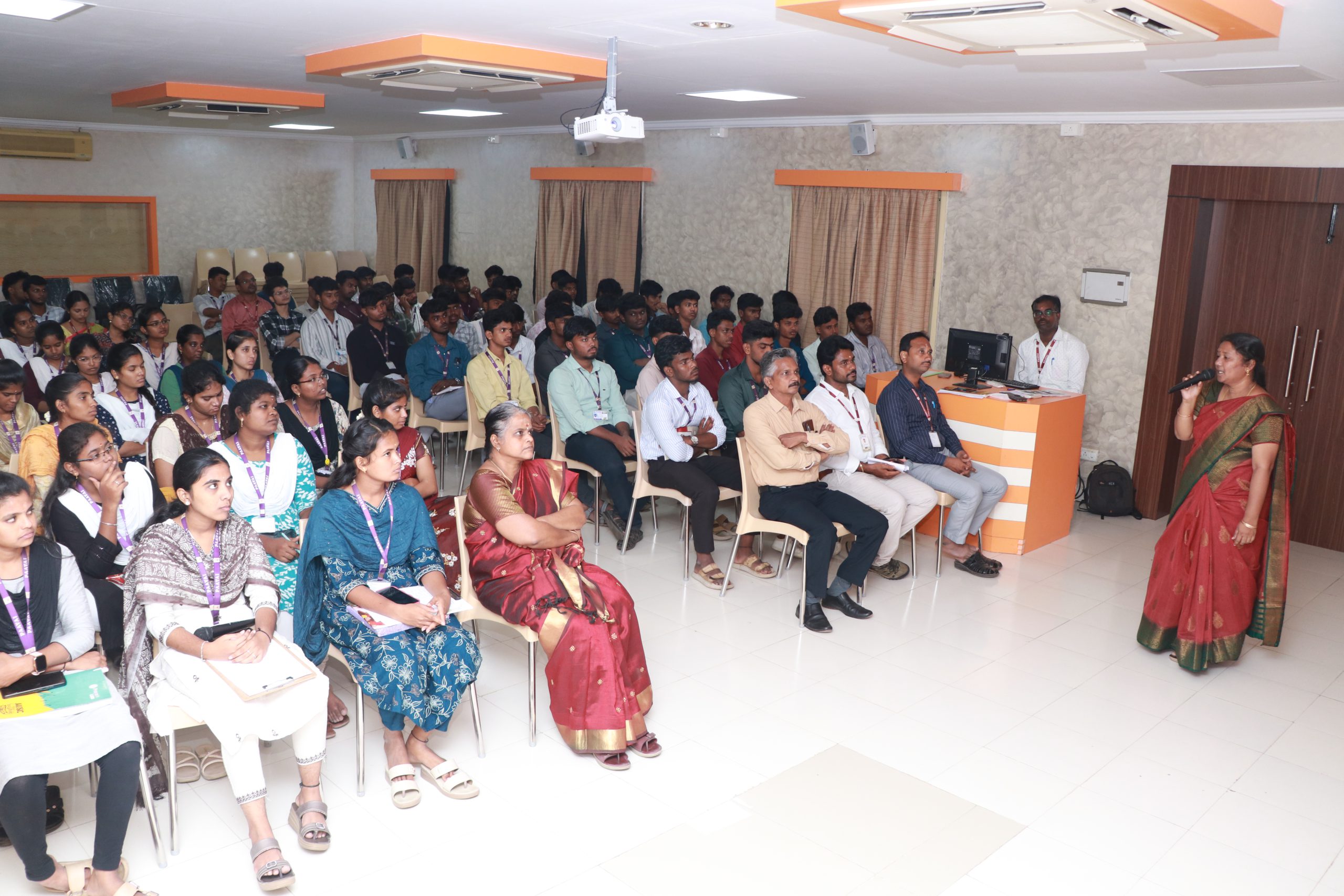
Dr. V. Royna Daisy, Assistant Engineer, Tamil Nadu Electricity Board, Salem served as the resource person for the Guest Lecture. She explained for electrical engineers, this is not merely a subject belonging to theoretical physics. Quantum technologies are increasingly connected with areas that are central to our profession—power systems, optimization, electronics, communication, control, signal processing, sensing and energy systems. Research has already explored quantum approaches to power-flow analysis, unit commitment, contingency analysis, state estimation, fault diagnosis and other power-system problems
Another promising area is quantum sensing. Quantum sensors can potentially provide highly sensitive measurements for applications such as power-grid monitoring, transformer and power-line fault detection, and grid synchronization.
Dr. V. Royna Daisy Mam, encourage our students not be afraid of emerging technologies. Learn their fundamentals, question their limitations, experiment with them, and discover where they can create genuine engineering value. Finally, the vote of thanks was proposed by Ms.S. Srinithi, Third -year student. The session was highly informative and enriched the participants with valuable knowledge.
Dr.A.Rathinam, Mr. P. Gopinathan and Mrs. S. A. Nivethaa, coordinated the Guest Lecture along with other faculty members. Around 135 participants actively took part in the guest lecture.