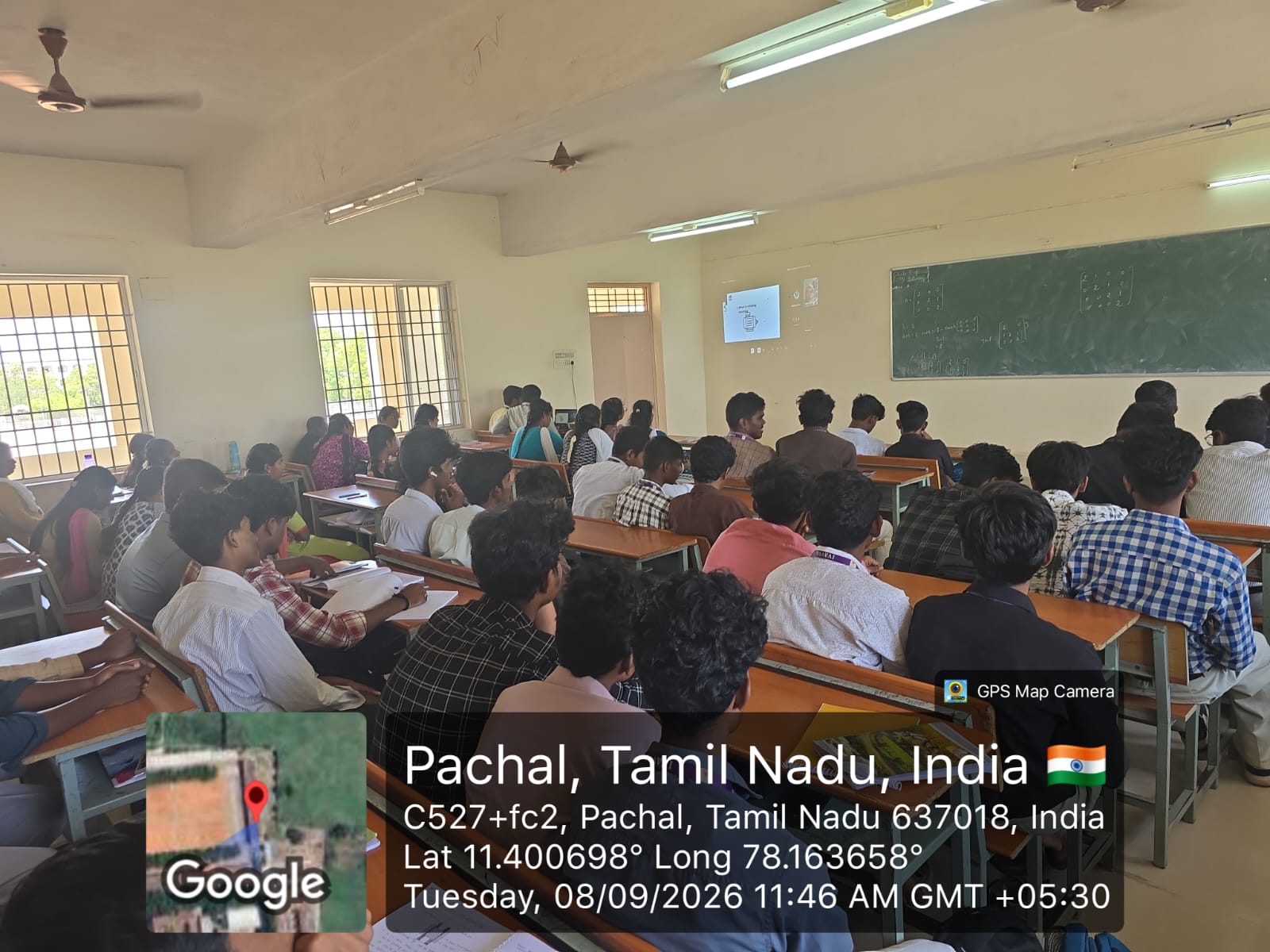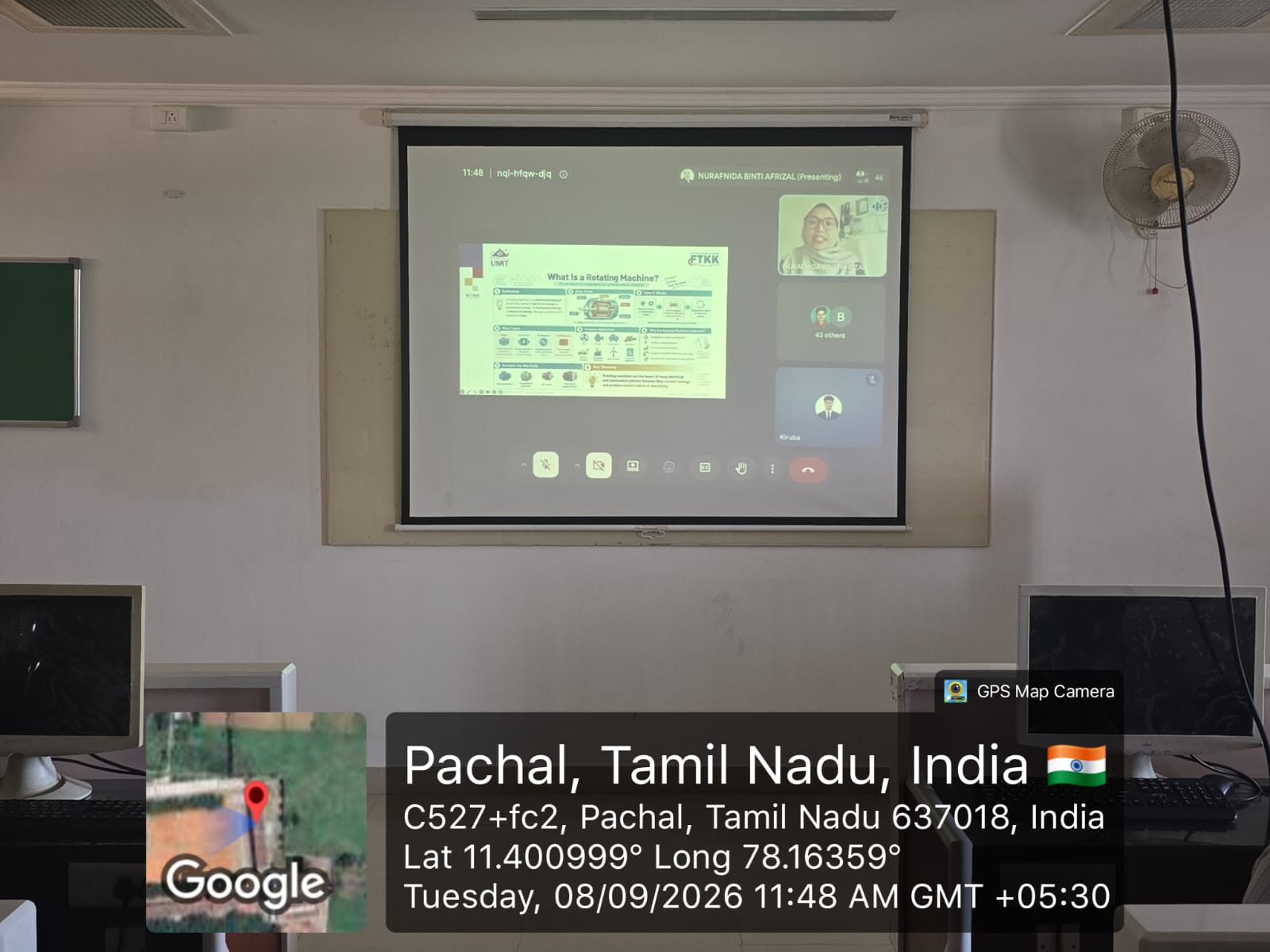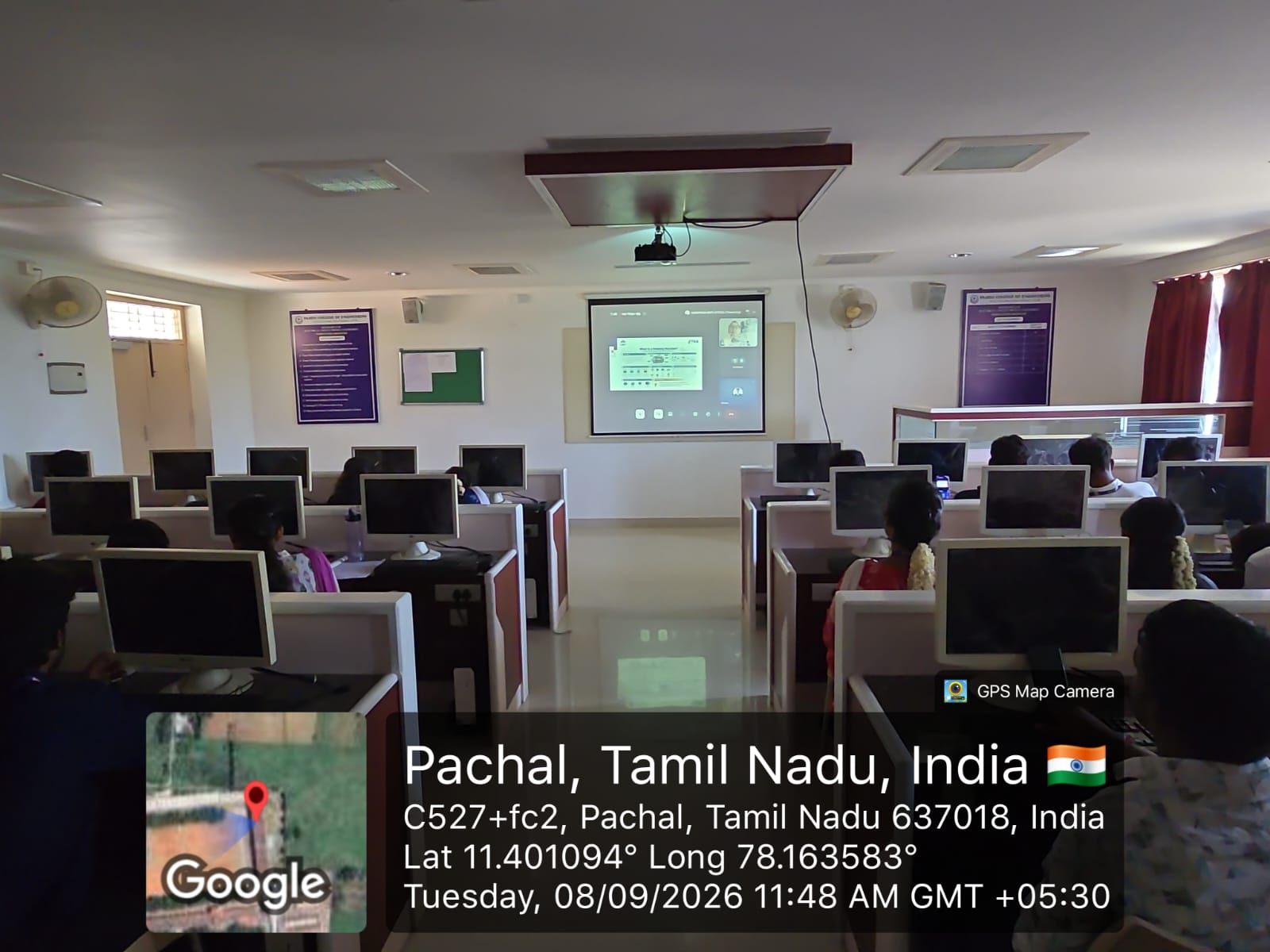
The Department of Electrical and Electronics Engineering, Paavai College of Engineering, organized an insightful Online Guest Lecture on the theme “Recent Advances in Electrical Measurement and Signal Processing for Rotating Machines” on 8th September 2026.
The programme commenced with a warm welcome address delivered by Mrs. R. Bhuvaneshwari, AP/EEE, followed by the introduction of the Chief Guest by Mr. R. Jeevanandh, AP/ EEE.
Dr. V. Hariharan, Principal, Paavai College of Engineering, delivered the presidential address, in which he elaborated that Electrical rotating machines constitute the fundamental backbone of modern industrial infrastructure. From conventional manufacturing plants and power-generation facilities to electric vehicles, robotics, renewable-energy systems, and intelligent automation, motors and generators play an indispensable role in converting and controlling energy.
Dr. Nurafnida Afrizal, Faculty of Ocean Engineering Technology, University of Malaysia, Trrengganu, served as the resource person for the Online Guest Lecture. She explained that as industries move towards autonomous systems, accurate measurement and intelligent interpretation of machine signals have become increasingly important.
Today, advanced signal processing techniques enable us to extract meaningful information from complex and often non-stationary machine signals. The integration of these techniques with Artificial Intelligence and Machine Learning has opened a new dimension in predictive maintenance.
Dr. Nurafnida Afrizal, encourage our students to continuously upgrade their knowledge, develop hands-on skills, and explore interdisciplinary research opportunities in emerging areas of electrical machine diagnostics and intelligent condition monitoring.
Finally, the vote of thanks was proposed by Ms. S. Srinithi, Third – year student. The session was highly informative and enriched the participants with valuable knowledge.
Dr.A.Rathinam, Dr. N. Mohanapriyaa and Mr. N. Mohanasundaram, coordinated the Online Guest Lecture along with other faculty members. Around 120 participants actively took part in the online guest lecture.