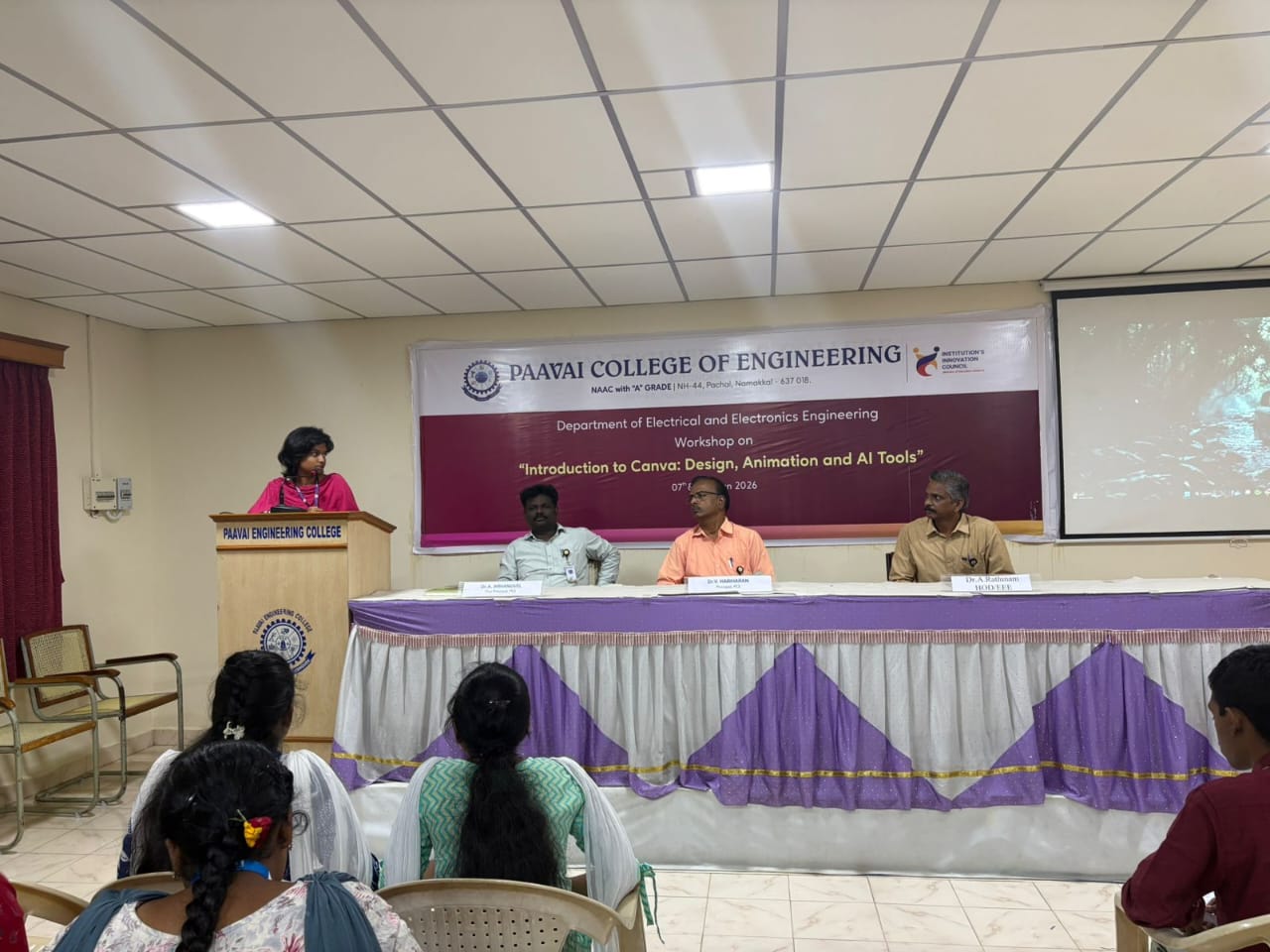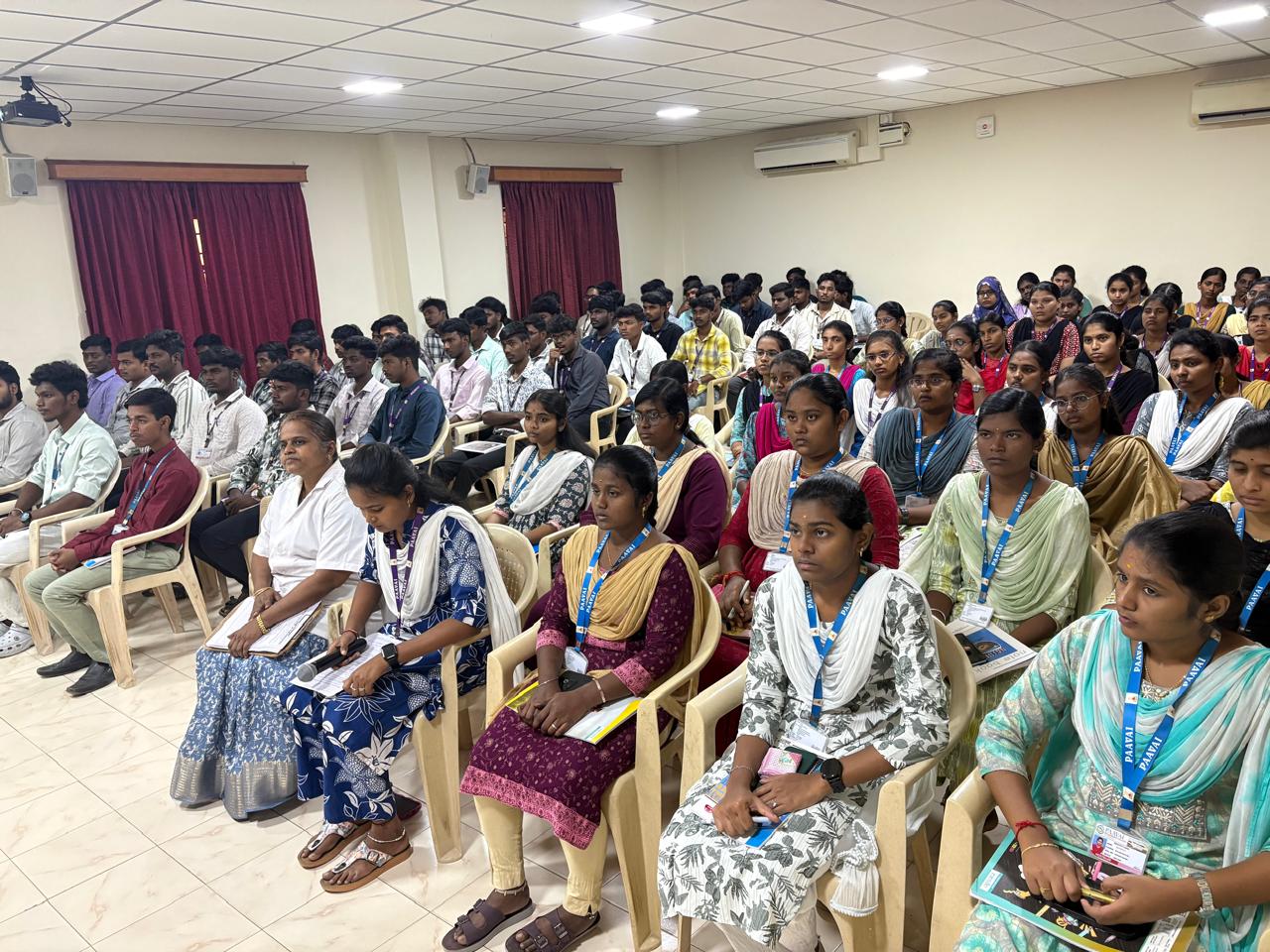
The Department of Electrical and Electronics Engineering, Paavai College of Engineering, organized a one-day workshop on “Introduction to Canva: Design, Animation & AI Tools” on 8th January 2026. The program was aimed at equipping students with modern digital design skills and AI-powered content creation techniques to enhance research dissemination and academic presentations.
The session commenced with a warm welcome address by Ms. Harishna A, II year student, followed by the Chief Guest introduction by Ms. Srinithi S, II year student, who briefly outlined the professional achievements and contributions of the resource person.
The Presidential Address was delivered by Dr. K. K. Ramasamy, Admin, Paavai Institution. In his address, he emphasized that in the current digital ecosystem, communication has evolved beyond traditional text-based formats to include visual, motion graphics and interactive content. He stressed that tools like Canva empower to design high-impact visual materials, making complex technical concepts easier to understand and more engaging for students.
The technical session was led by Dr. V. Hariharan, Principal, Paavai College of Engineering, who served as the resource person. He delivered an in-depth explanation of how Artificial Intelligence is integrated into Canva’s design ecosystem. He elaborated on AI-driven features such as Magic Design, Text-to-Image generation, automatic layout optimization, smart color palette selection, and content recommendation systems. He explained how machine learning algorithms analyze user inputs, design patterns, and contextual data to generate professional-quality designs in real time. He concluded by stating that embracing such digital tools is essential for institutions aiming to stay relevant in the era of Education 4.0 and AI-driven learning environments.
The program concluded with the Vote of Thanks proposed by Ms. Srinithi S, II year student.
The workshop was efficiently coordinated by Dr. A. Rathinam, Mr. N. Mohanapriyaa, and Mr. S.A. Nivethaa, along with the support of other faculty members. Around 100 students actively participated in the program and benefitted.